

First European Fort in Asia; First Embryo of Globalisation (Continuation of the previous post in Qatar. Historical juncture of Globalisation):
Is Globalisation ending ?
Fort Kochi, 8/06/2025
Globalisation
As Professor Vinay Lal accurately asserted in one of his lectures: “Terms and concepts have their own particular archaeology”; and so he gave the example between the term “improvement”, used during British India colonial period, and the term “development”, used mostly since the post-war era, regarding the betterment of a people, a nation, etc. Each term comes with its own distinctive elements, belonging to the time and conditions of the world at that time …………
And so Globalisation has it own particular elements. Yes, the silk roads trading system, operated by the peoples of Central Asia, mostly (not by the place where the silks where made); and the Roman trade system had reached India and China. And so the Mongol Empire created a relatively peaceful and safe trading system that allowed transnational trade to exist and even allowed European monks to reach Karakorum. But to call them, in retrospect, “Globalisation“, would be a little bit of a presentism: attributing to the past, phenomena which belong to our present. Confusing verisimilitudes.
But Globalisation has its own particular element: at its core is Colonialism
The logic:
Globalisation is Colonialism,
Stands by the fact that Colonialism is a direct precedent of Globalisation; element without which, Globalisation could not exist as a reality or a phenomenon, at all. The skeleton, the muscles and the tendons of Globalisation were conceived, nourished and matured by the economic and political relationships of the Colonial period: destruction of the original local and regional relationships of commerce and culture, then inserting them into a Global market through the creation of artificial local elites, subservient to colonial powers: what Mark Davis so accurately describes as: The Creation of the Third World . Racial degradation through ethnic humiliation; slavery of the native; colour distinction and a global institutionalisation of racism, beating until today: in jobs, access to education; immigration; health and wealth; etc, etc, etc round the world. Same regions, same races.
Colonialism directly, and somehow without even a slight distinction, transited into Globalisation. It took longer, in Western Countries, to transit from Feudalism to Capitalism than from Colonialism to Globalisation. Of course, Capitalism is the propeller of Colonialism; and so Globalisation has capitalism at its core; being Capitalism then engine at the centre of “freedom”, the free-word and all the high-values that freedom has brought to human civilization, as the ultimate representation of “human nature” itself (as they claim); and so Globalistaion is simply that flower that sprouted out of free-trade and freedom.
Of course, not that slavery did not exist before; it was simply made Global, and globally traded.
Not that local, regional conflicts did not exist among natives and locals round the world: they were simply made into wars and extermination of the brutes.
Not that war did not exist round the human world; it was simply exported at large scale, Globally.
And so poverty and any other already existing problem among local communities, Globally: exacerbated / increased.
And certainly:
The Scale Matters
As the scale of existence directly affects <time>: it reduces the time in the life-span of things and phenomena.
As if war would be extended globally, the life span of such a war would simply be shorter than any other wars.
Fortunately, having reached and being where Globalisation had its first embryo and seed which gave its current characteristics, I can finally say that Globalisation has ended.
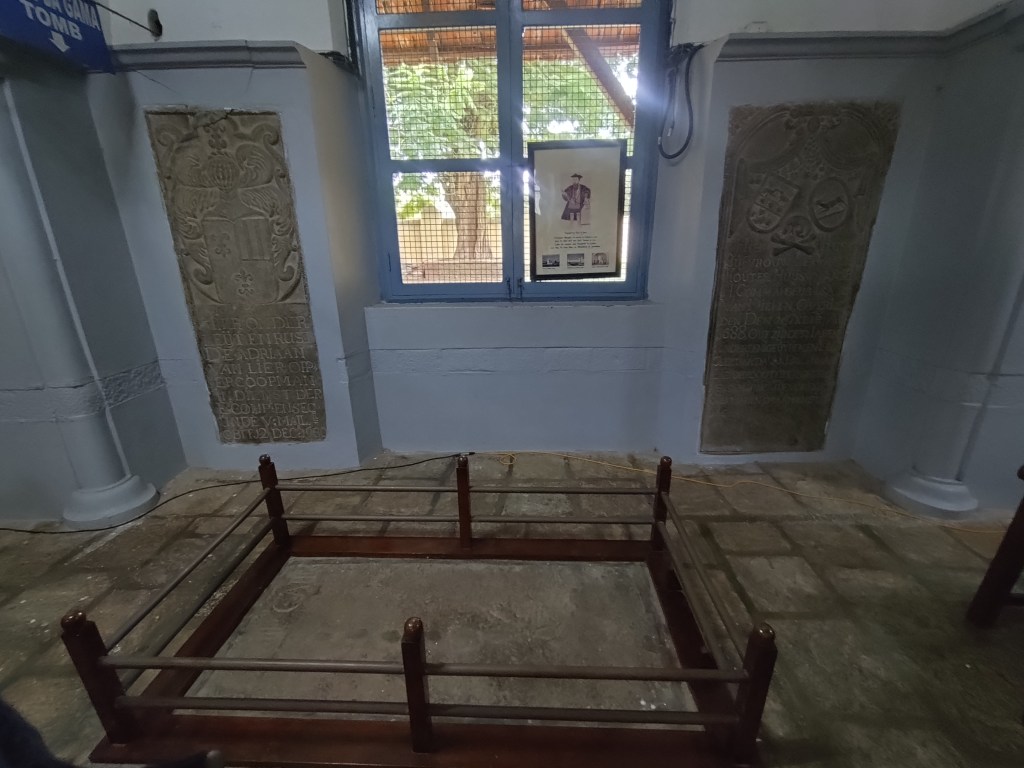
Vasco de Gama’s Tumb; Fort Kochi; Kerala, India.




Leave a reply to End of Globalisation (3) – Hado Cancel reply